


Is Your Handmade Work Safe in an AI World?

Artificial intelligence is rapidly changing the creative landscape. Images can now be generated in seconds, styles imitated with striking accuracy, and visual concepts produced at a speed that would have once seemed impossible. For artists around the world, this has sparked both curiosity and concern: is AI simply another tool, or does it represent a deeper shift in how creative work will be valued?
For Caribbean artists, this conversation carries particular weight because art in the region has never existed only as visual output. It is deeply tied to memory, place, struggle, cultural identity, and lived experience.
A painting from the Caribbean often holds more than composition. A textile may carry inherited techniques. A sculpture may reflect history, migration, resistance, spirituality, or social commentary. Even in contemporary practice, creative work across the region frequently emerges from layered cultural realities that are difficult to separate from the final piece itself.
This is where AI creates an important tension.
Artificial intelligence can reproduce visual patterns, generate references, and imitate styles, but it does not possess cultural memory. It does not inherit place. It does not carry lived experience.
What AI may disrupt most are parts of the market built around speed, repetition, and digital efficiency, commission-based graphics, stock-style visuals, and certain forms of commercial output where quick production has economic value. For artists whose work depends heavily on these systems, adaptation may become necessary.
But this does not automatically reduce the value of all artistic practice.
In many ways, the rise of AI may sharpen public awareness of what remains distinctly human in art.
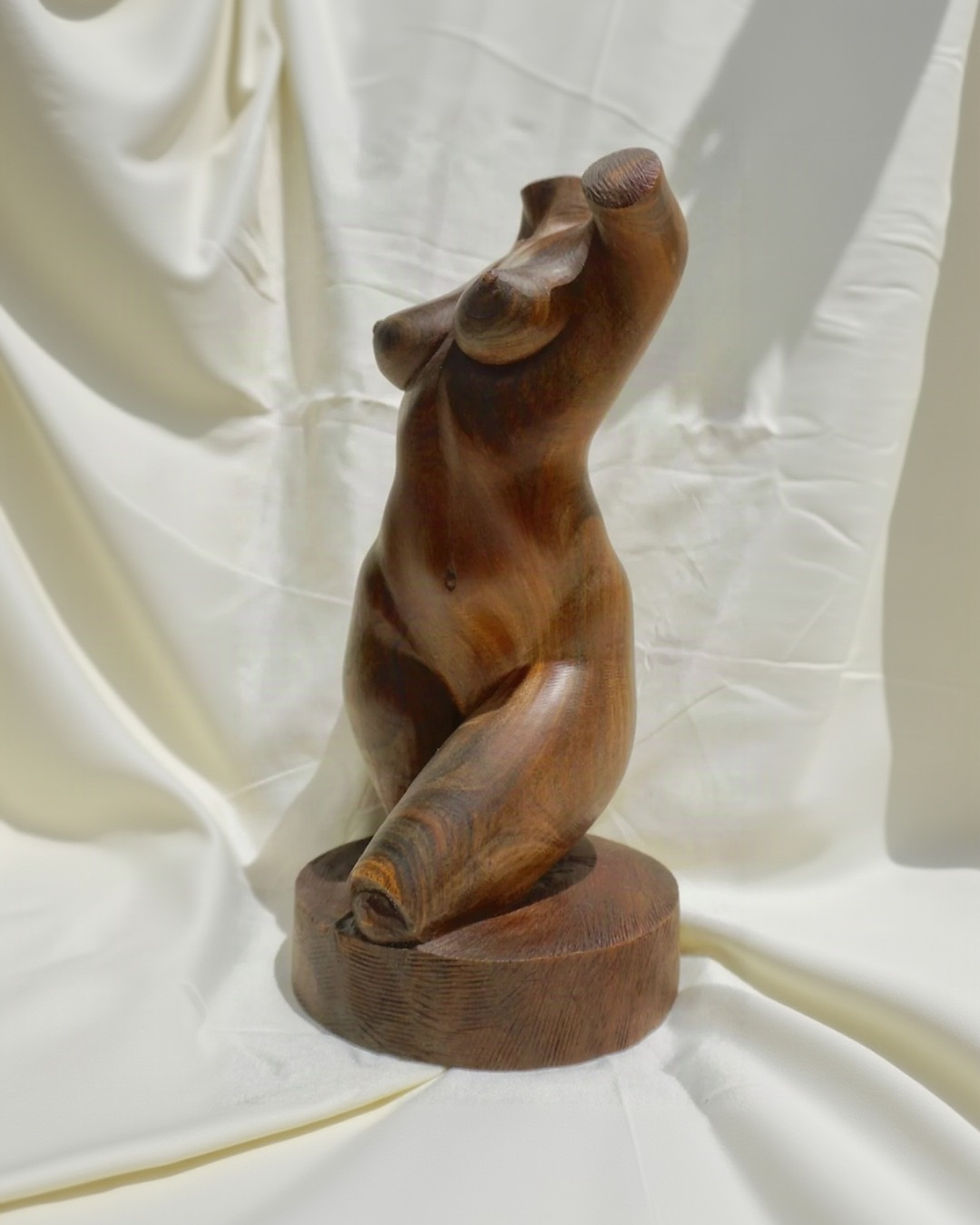
A handmade painting, an embroidered surface, a carved form, or a ceramic object contains visible evidence of time, labour, decision-making, and physical presence. These qualities cannot be separated from the object itself. A brushstroke left slightly uneven, the pressure of a hand, the subtle irregularities in material, these are increasingly read not as imperfections, but as proof of human involvement.
As generated content becomes more common, authenticity may become more noticeable. And what is difficult to replicate often gains new value.
For Caribbean creatives, this may create a renewed importance around authorship and material practice. Handmade work may become even more valuable precisely because technology makes imitation easier. In a world where visual abundance is increasingly machine-assisted, work that carries unmistakable human presence may become culturally and economically distinct.
This does not mean artists must reject AI entirely. Many creatives are already exploring it as a research tool, an idea generator, or part of broader experimentation. The larger issue is not whether AI should exist within creative practice, but how human creativity continues to be understood alongside it.
The future may not be defined by handmade versus artificial intelligence.
It may be defined by a growing recognition that while machines can generate images, they cannot fully replace the histories, contexts, and human depth that give art meaning. For Caribbean artists, that distinction may matter more than ever.


Comments