


Let's Not Make the Same Mistake Here

When a community needs a mural, who should get the opportunity to create it?

A recent controversy in Bristol, UK has sparked a wider conversation about artificial intelligence, artists and creative opportunities.
An AI-generated mural was installed on the side of the Jolly Colliers pub in Bedminster, an area well known for its street art culture. The mural featured Bristol landmarks including the Clifton Suspension Bridge and hot air balloons.
The response from the local creative community was swift.
Artists and residents criticised the decision to use an AI-generated design, with a letter placed on the building describing it as an “insult” to artists. Local artists also argued that they would have been willing to create the mural themselves.
And the location matters.
Bedminster is home to Upfest, a major street art festival that brings artists to the area to paint murals, alongside workshops, talks, exhibitions and other creative events. Bristol has built a significant part of its cultural identity around its street art scene.
So the criticism was not simply about whether people liked the mural.
It was about opportunity.
For an artist, a mural is more than paint on a wall. It can be paid work, exposure, a portfolio opportunity, a chance to build relationships and an opportunity to contribute something lasting to a community.
That is why the question surrounding this incident extends beyond Bristol.
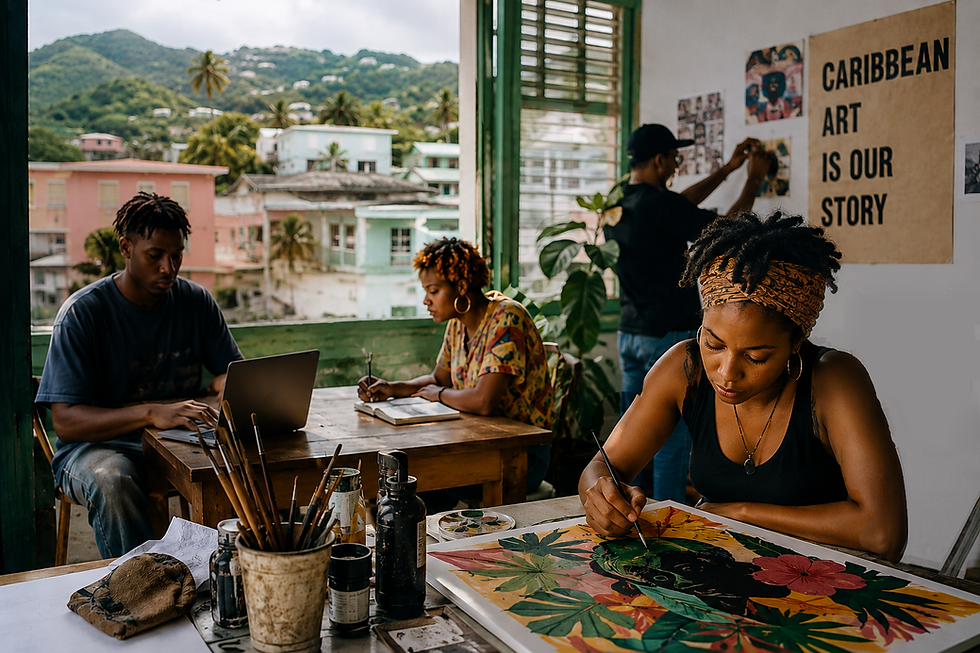
What about the Caribbean?
Our region has no shortage of creative talent.
We have painters.
Illustrators.
Muralists.
Graphic artists.
Visual storytellers.
And so much more.
Across the Caribbean, artists are already creating work that reflects our histories, communities, identities and everyday experiences.
They understand the places they are depicting because they live in them.
So when a hotel needs artwork, when a public space needs a mural, when a business wants a distinctive visual identity or when a community wants to tell its story through art, who are we choosing to give those opportunities to?
AI can be a tool. Artists can use it, experiment with it and incorporate it into their creative processes.
But there is a difference between using technology as a creative tool and using it as a reason not to commission a human being when an artist could have been given the opportunity.
The Bristol mural was ultimately removed. The pub's owners said the AI mural had been a temporary solution and that they planned to work with local artists and the community on a permanent mural.

Perhaps there is something for the Caribbean to consider before we find ourselves having the same conversation.
Before turning to AI, ask:
Which Caribbean artist can I commission?
Because our region does not need to look outside itself for creative talent.
Sometimes, we simply need to create more opportunities for the talent already here.


Comments