


Mabusha Dennis: Seeing as Practice
- Iandria Roper

- May 4
- 1 min read
Works by Mabusha Dennis are grounded in attention. His paintings begin with what is already around him and build from careful looking rather than invention.
The work draws from everyday surroundings. Light, distance, land and the quiet presence of people within these spaces form the core of what he paints. What appears on the canvas is not staged or constructed, but observed over time.

Dennis often returns to similar environments. This repetition is not about limitation but depth. With each return, small shifts become visible. The way light sits on open ground changes. The relationship between figures and space becomes clearer. Ordinary moments begin to hold more weight simply through familiarity.
At the centre of his practice is observation as a discipline. Painting becomes a way of understanding how space is structured and how it is experienced. Fields organise movement. Distance creates rhythm. People appear as part of the environment rather than separate from it.

There is a restraint in the work. It does not rely on drama or spectacle. Instead, it holds close to what is already there and allows it to remain intact. The interest lies in how familiar places can feel newly seen when given sustained attention.
Across the body of work, the focus stays consistent. It is less about what the landscape represents and more about how it is seen. This shift places importance on perception itself and on the act of looking long enough for detail to emerge.
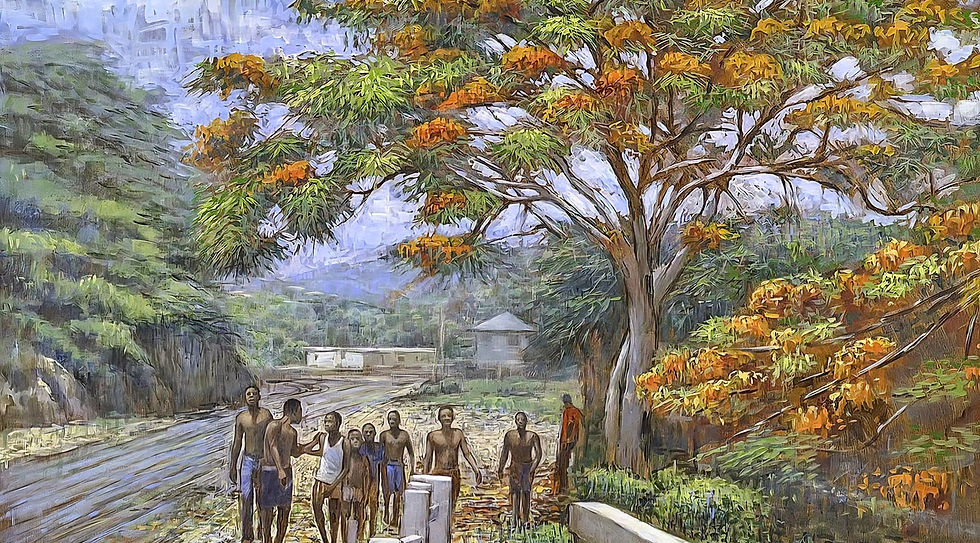
In this sense, Dennis’s paintings can be read as records of attention. They invite a slower engagement with the world and a closer consideration of what is often overlooked in plain sight.


Comments